How Long Can a Home Battery Keep Your Lights On?
A home battery can keep your lights on for several hours or even days, depending on its usable capacity, the number of lights you operate and the electricity consumed by other appliances. The key is to calculate how much energy your household needs rather than relying on battery size alone. A few LED lights require relatively little power, while a fully occupied home draws energy from refrigeration, air conditioning, communications and other equipment. Understanding these differences makes backup planning far more precise.
What Determines How Long Your Lights Stay On?
Start With the Power Draw of Your Lighting
Lighting is often one of the easiest household loads to estimate. Check the wattage printed on each bulb or listed in its product specifications, then multiply that figure by the number of lights you expect to run. For example, ten 10-watt LED bulbs consume 100 watts when operating together. Running them for five hours requires 500 watt-hours, or 0.5 kWh, before accounting for conversion losses. This calculation provides a useful baseline for estimating lighting runtime. Your actual result will depend on how many lights you switch on, how long each room remains occupied and whether other equipment shares the same battery supply. A room-by-room estimate gives you a more realistic picture than assuming every light stays on continuously.
Battery Capacity Is Only Half the Equation
Battery capacity, measured in kilowatt-hours, indicates how much energy a system stores. The electrical load determines how quickly that energy is consumed. A battery with 12 kWh of nominal capacity, for instance, could theoretically supply a constant 1 kW load for 12 hours before losses and operating limits. At a 500-watt load, the same energy could theoretically last 24 hours. These figures are simplified illustrations, not guaranteed runtime estimates. Actual performance depends on usable capacity, inverter efficiency, battery operating conditions and the power available to connected circuits. When comparing systems, consider both stored energy and continuous output. A battery needs sufficient capacity for the desired duration and sufficient power to operate all connected appliances at once.
Other Appliances Change the Runtime
Lights rarely account for all the electricity a household consumes during an outage. Refrigerators cycle on and off, internet equipment runs continuously, and kitchen appliances may draw substantial power for short periods. Air conditioning can add a significant load, especially during hot weather. Consider a simplified scenario in which lighting consumes 100 watts and networking equipment consumes another 30 watts. Together, they draw 130 watts, requiring 1.3 kWh over ten hours. Add refrigeration, and the total rises according to the refrigerator’s actual energy consumption. The most useful approach is to separate essential loads from optional ones. This allows you to estimate how long the battery will support your preferred combination of lights, communications and other household necessities.
How to Estimate Runtime and Extend Your Backup
Use a Simple Runtime Calculation
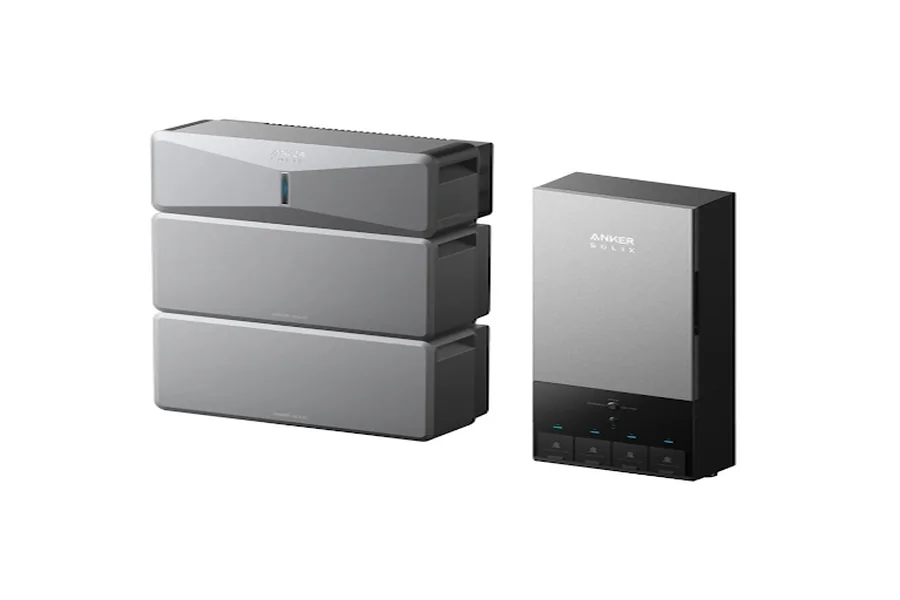
You can estimate battery runtime with a straightforward formula: usable battery capacity in watt-hours divided by total load in watts. If a system has 12,288 Wh of nominal battery capacity and your selected appliances draw 500 W, the theoretical runtime is approximately 24.6 hours. This example illustrates the calculation rather than promising a specific operating duration. Usable capacity and conversion losses will affect the actual result. The Anker SOLIX E10 Whole-Home Backup configuration with one power module, two B6000 batteries and a Power Dock contains two batteries rated at 6,144 Wh each, giving 12,288 Wh of combined nominal capacity. This provides a concrete reference point when estimating lighting and other essential household loads.
Match Battery Output to Your Backup Plan
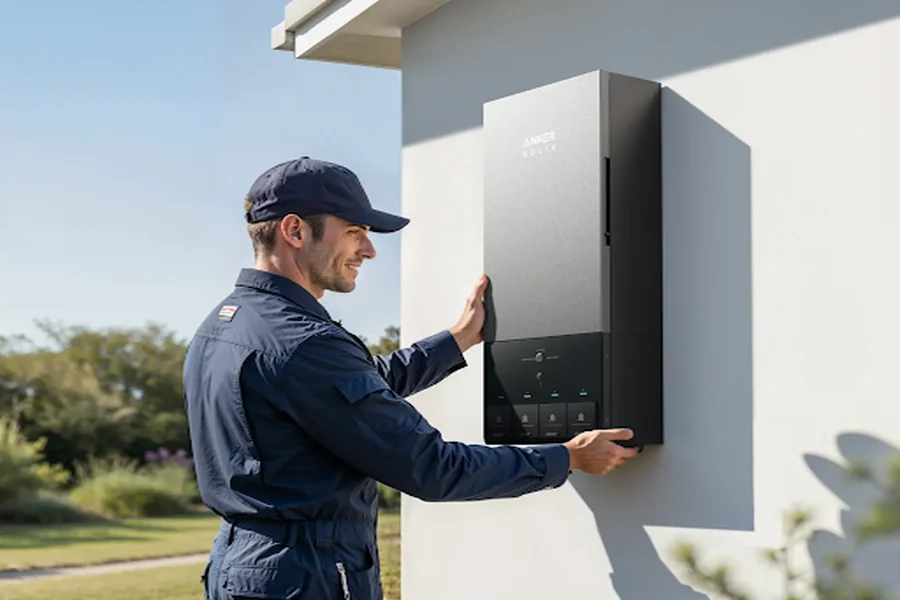
Runtime calculations answer how long stored energy may last, but output ratings determine which appliances can operate together. The Anker SOLIX E10 provides 7,680 W of continuous output with batteries and up to 10,000 W of turbo output for 90 minutes with two batteries. This combination accommodates a range of household loads, subject to the system configuration and electrical installation. The Power Dock supports 120/240 V split-phase connections and automatic switchover in 20 milliseconds or less. For lighting, that rapid transition means the backup system can respond quickly when grid power disappears. The wider benefit is continuity across compatible connected circuits, allowing households to plan for more than individual lamps while keeping total demand within the system’s operating limits.
Extend Backup With Solar and Additional Storage
Longer outages require a different strategy from short interruptions. Reducing unnecessary consumption preserves stored energy, while solar generation can replenish the battery when sunlight is available. The E10 supports up to 9 kW of solar input per power module and can integrate with an existing solar installation through an appropriate CT-based setup. Its storage capacity can also expand from 6 kWh to 30 kWh per power module, with up to 90 kWh across three units. A compatible Smart Generator provides another charging option for extended outages. These features make home battery backup more adaptable to changing household requirements. However, actual runtime still depends on energy consumption, available sunlight, charging conditions and the size of the installed system.
Conclusion
A home battery can keep lights on for hours or longer, but the exact duration depends on stored energy and the total electrical load. Calculate lighting demand, account for other essential appliances and distinguish theoretical runtime from actual performance. The Anker SOLIX E10 combines 12.288 kWh of nominal storage in the specified two-battery configuration with substantial continuous output and options for solar charging and expansion. By matching capacity to your household’s priorities, you can make a more informed decision about backup duration and everyday energy needs.