Building the Electric Highway: Nations Sprint to Create Charging Networks
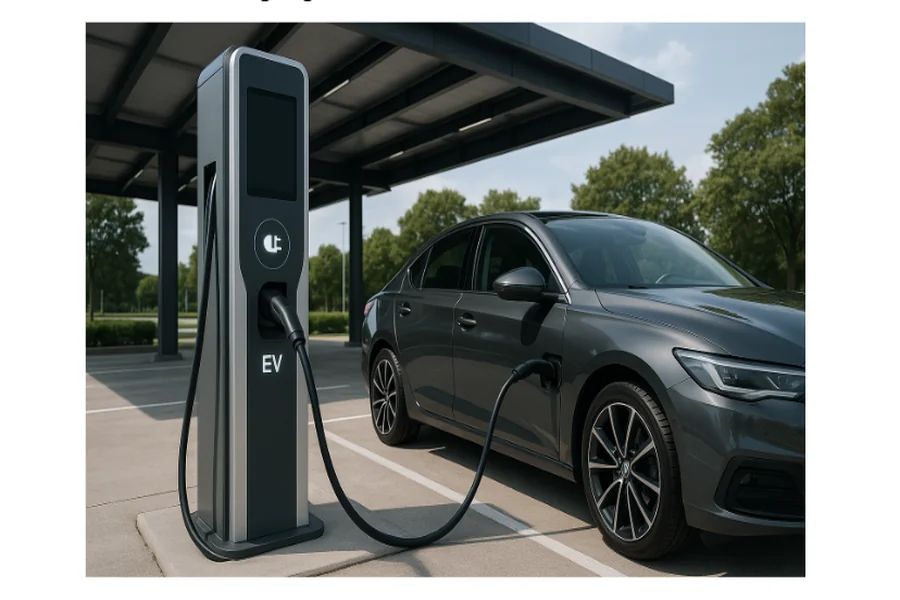
China installed 2.59 million public charging points in 2023 alone. That’s more infrastructure deployed in twelve months than most countries possess entirely. But China isn’t the only player racing to wire the world for electric vehicles. The global infrastructure build-out resembles high-stakes competitive environments where timing and coverage determine winners — much like platforms tracking promotional opportunities such as bonus 1xbet 2025 campaigns, where network reach and user accessibility drive market success.
And this race isn’t slowing down. Countries worldwide recognize that inadequate charging infrastructure creates the primary barrier to mass EV adoption. Range anxiety disappears when drivers trust they’ll find working chargers.
The Numbers Game: Current Infrastructure Reality
EV charging infrastructure expansion statistics reveal dramatic growth patterns across regions. The Netherlands had the largest national charging network in Europe, with over 180,000 public charging points, followed by Germany (160,000) and France (155,000). These numbers represent actual installed hardware, not future promises.
The U.S. increased its charging stock by 20% in 2024 to just under 200,000 public charging points. But federal funding creates complications. The National EV Infrastructure Program allocated USD 5 billion to fund fast chargers along corridors, although by the end of 2024 only around USD 30 million had been spent on charging points that are now in operation. Political changes affect infrastructure timing, creating uncertainty for charging companies and drivers alike.
Key expansion metrics show uneven progress:
- Urban areas see 35% annual growth in charging devices
- Rural installations lag behind at slower deployment rates
- Fast charging capabilities expanding faster than slow charging options
- Private sector investment outpaces government funding in many regions
- Grid capacity limitations constrain installation in high-demand areas
- Standardization challenges slow interoperability improvements
- Payment system fragmentation creates user friction across networks
Technology Evolution and Power Delivery
Charging speed determines user adoption more than location convenience. In March 2025, BYD set a new benchmark with its Super-e platform, which is claimed to deliver around 400 km of range in 5 minutes. These breakthrough speeds require sophisticated cooling systems and high-voltage architecture that most current networks can’t support.
Tesla brought online approximately 2,200 new Supercharger stalls worldwide, representing a 17% year-over-year growth for the quarter. The company maintains expansion momentum despite internal disruptions. Tesla’s net growth of stations amounted to 246 (up 10% year-over-year) in Q2 2025, with average station size increasing to 11.8 stalls per location.
Power delivery capabilities shape network competitiveness. Ultra-fast charging technology developments show the technical race reaching new levels. Tesla plans to increase power delivery to 500 kW in the future with their V4 cabinet systems supporting up to 1.2 MW for commercial vehicles.
Payment Systems and User Experience
Network fragmentation creates the biggest user complaint about public charging. Drivers need separate apps, accounts, and payment methods for different charging companies. This friction discourages occasional users who want simple, credit-card-based transactions.
Tesla still accounted for 40.2% of the new fast-charging ports opened between April and June. Its all-time share is at a solid 54.3%. Market concentration around Tesla’s network creates dependencies that concern competitors and regulators. Other networks struggle to match Tesla’s reliability and user experience standards.
Regional Competition and Strategic Approaches
European regulations drive systematic infrastructure development. The Alternative Fuels Infrastructure Regulation (AFIR), which mandates the installation of fast-charging stations for cars and vans of at least 150 kW every 60 km along the TEN-T core road network by 2025. This regulatory approach contrasts sharply with market-driven development in other regions.
Korea has seen rapid growth in its fast charger stock (including ultra-fast), rising from 34,000 in 2023 to 47,000 in 2024. Government funding supports this expansion, with authorities plan to deploy 4,400 new fast chargers in high demand areas during 2025. Budget allocation shows commitment: Korea’s total budget for enhancing charging infrastructure was raised by 40% compared to 2024 to KRW 620 billion (Korean won) (USD 425 million).
Market consolidation appears inevitable. Smaller charging network operators face capital constraints while larger companies benefit from economies of scale. Tesla, ChargePoint and EVgo led this quarter-over-quarter speed of deployment in the U.S. market, suggesting that successful networks require substantial financial resources and technical expertise.
Network utilization rates reveal market immaturity. The average utilization rate of fast charging stations in the U.S. dropped from 16.6% in the first quarter to 16.1% in Q2. Low utilization creates profitability challenges for charging companies, potentially slowing future expansion.