Why Regular Material Handling Equipment Maintenance Is Crucial for Operational Safety
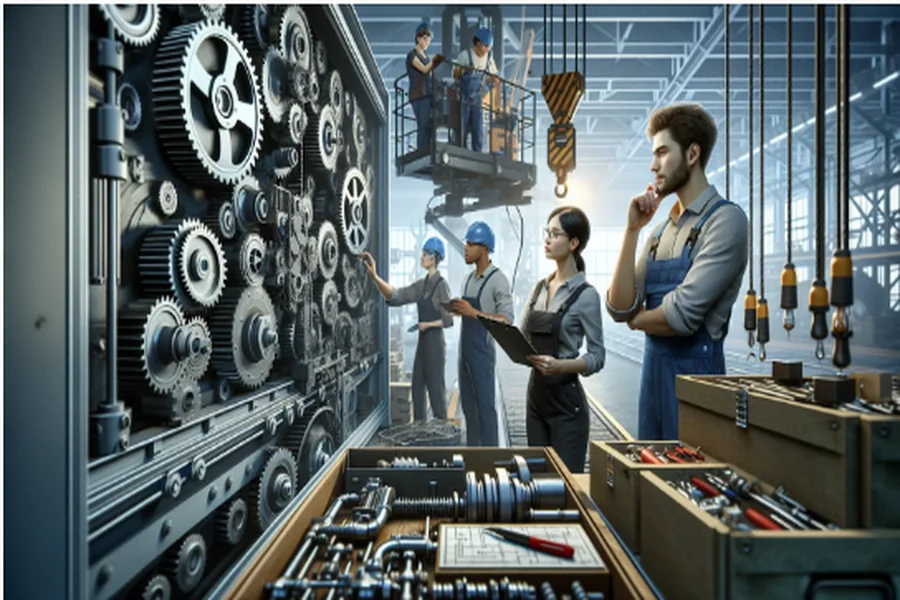
Most people working in warehouses or logistics will tell you that machines rarely break down at convenient times. It usually happens in the middle of a busy shift, when orders are piling up and every minute of downtime costs money. That’s where material handling equipment maintenance steps in; not as an afterthought, but as a preventive, everyday discipline.
Whether you’re using stackers in a small distribution unit or forklifts in a large warehouse, skipping regular checks can cause more than delays. It puts people, stock, and your own credibility at risk. And if you’re someone who depends on truck and forklift hire, then being careless about upkeep can backfire, especially when you’re the one footing the bill for repairs caused by negligence.
Understanding Material Handling Equipment Risks
Material handling equipment covers a wide range: forklifts, reach trucks, pallet jacks, stackers, order pickers, cranes, and more. Each of these machines comes with moving parts, hydraulic systems, electrical controls, and weight-bearing capacities. And all of them operate in environments where people, goods, and machines share the same space.
If one of them malfunctions, say, a forklift’s brake fails, or a pallet jack’s hydraulics leak, it could lead to dropped goods, workplace injuries, or a full-on warehouse shutdown. Many incidents traced back to human error are actually the result of machines not being properly maintained.
What Does Regular Maintenance Cover and Why Should You Do It
Now, maintenance isn’t about tightening one bolt and calling it a day. It covers a broad set of checks ranging from mechanical, electrical, safety-related, to environmental checks.
- Safety features: Warning alarms, reverse beepers, lights, seat belts and safety cut-offs must be tested regularly. If ignored, you might not even know a machine is faulty until it’s too late.
- Electrical systems: Battery health, charging systems, and cables need to be inspected for wear. Faulty batteries aren’t just a productivity issue; they can pose fire risks.
- Brakes, tyres, steering: These determine how well the operator can control the machine. One delay in stopping can lead to a collision.
Safety Isn’t Just a Compliance Checklist
In many places, including India, safety inspections are a legal requirement. But if your only reason for maintenance is ticking off audit boxes, you’ve already missed the point.
For instance, if your facility handles hazardous materials or high-value goods, a mishap involving your handling equipment can cause damage worth lakhs. More importantly, it can cause permanent injury to someone.
Safety also improves employee morale. Operators are more confident when the equipment they use is predictable. And they’re less likely to cut corners when they know the machine responds well.
How Maintenance Impacts Cost Over Time
Here’s the thing most people get wrong: they think maintenance is expensive. What they don’t realise is that breakdowns are far more costly.
Say a medium-sized forklift breaks down mid-shift. The replacement may not be available immediately, causing delays in shipments. If a part needs replacement, that’s easily INR 25,000 to INR 75,000, depending on the make. If it’s a major fault, like a hydraulic system failure, you’re looking at well over INR 1 lakh in repair costs.
Now compare that to a regular preventive maintenance plan that costs maybe INR 2,000 to INR 3,000 per month. Add to that the reduced chances of missed deadlines, product damage, and overtime wages. Suddenly, maintenance seems like a pretty smart investment.
Even if you opt for truck and forklift hire, most rental contracts include basic servicing. But the onus of daily checks still lies with you. If the machine is misused or neglected, you could end up paying for repairs, or worse, be held liable for accidents.
How Equipment Failure Affects Overall Operations
When a piece of handling equipment stops working, it’s rarely an isolated problem. One delay in the unloading bay can create a bottleneck across multiple departments, including packing, dispatch, quality checks, and even transport. In a time-sensitive supply chain, that kind of delay has ripple effects. Orders go out late. Clients get frustrated. Staff end up working overtime to catch up. Managers spend the day fire-fighting rather than focusing on improvement.
In contrast, when equipment runs smoothly, so does everything else. That’s why experienced warehouse managers don’t treat material handling equipment maintenance as “extra” work. It’s part of the rhythm of the floor.
The Human Cost of Poor Maintenance
Let’s talk about the part that numbers can’t fully explain: people. A poorly maintained forklift that tips over doesn’t just damage goods; it could seriously injure the operator. A malfunctioning stacker could crush a foot, or worse.
Beyond the physical risk, there’s a psychological impact. After any accident, there’s fear. Operators hesitate more, and managers become stricter. And overall confidence in the work environment drops.
Conclusion
Running an efficient warehouse or plant isn’t just about moving things from one place to another. It’s about doing it safely, predictably, and without disruptions. Material handling equipment maintenance is a big part of that.
Whether you own your own equipment or use a truck and forklift hired from reputed companies like Godrej RenTRUST, keeping your machines in good shape can protect your personnel, your stock, and your schedule. It might not always be glamorous work, but it’s the kind of work that keeps everything else going.
So the next time someone skips a daily check or delays that maintenance visit, remember that it’s not just a box left unticked; it’s a safety net slowly coming undone.