From Proto-to-Product: A UX Course That Covers Data-Driven Design, Analytics & AI Insights
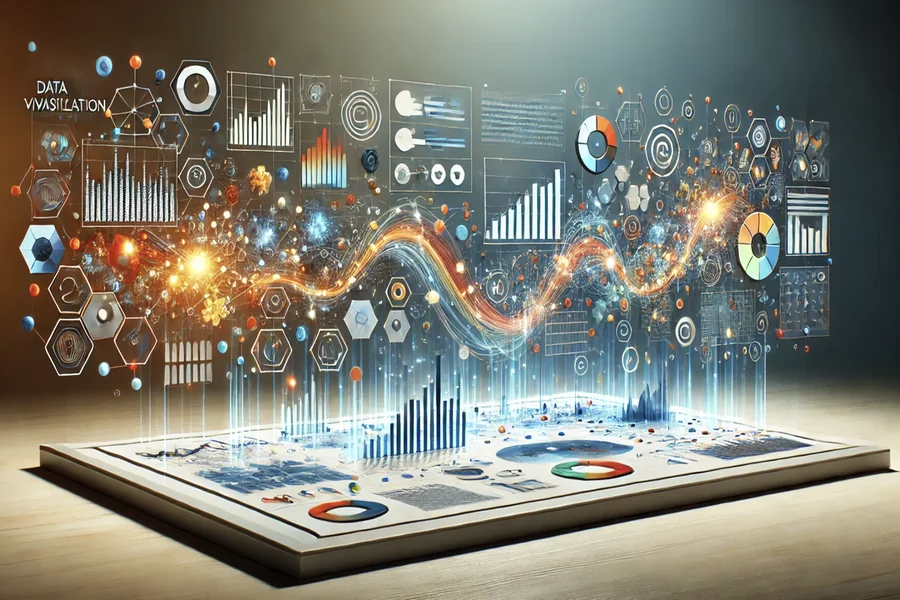
Intuition isn’t enough in today’s digital environment; great products are created using data and artificial intelligence. Every organisation is looking for data-centric, analytical, and creative professionals. This is why UI/UX design courses are so important; they help form the foundation learners need to confidently and clearly move from proto-to-product.
Modern educational courses are focused on data analytics, artificial intelligence, and understanding user behaviour. This combination of skills is producing a new generation of leaders in design who are creating smart systems that are seamless and highly functional.
The Transformation of UX Design: From Aesthetic to a Data-Driven Approach
UX design used to be mostly about the visual elements and the aesthetics that interfaces and displays offered. Successful UX today, however, is much more deeply ingrained. Modern UX design is about building systems that are functional and that utilise user data, behavioural analytics, and the power of AI so that every design decision is purposeful.
The UX design field has matured from a creative place to a much more multifaceted, strategic discipline. Evidence of this shift, as reported by UX Collective in 2025, shows that 73% of design decisions made in product-centric companies are now data-driven. This is a true testament to the increasing reliance on analytics to drive design decisions.
Why Modern UX Courses Should Include Data and AI
In the days of old, UX courses taught students about wireframes, prototypes, and usability testing. While these still are important, the real world is right around the corner, demanding designers who can read data and understand signals. Data like user interaction, the patterns of clicks, and elements of the conversion funnel are used to continuously improve the user experience in real time.
A forward-thinking UI UX design course includes traditional design and combines it with modern modules focused on:
- Understanding user data: Teaching insight and data analysis on heatmaps and interaction metrics to construct behaviour flows.
- Personalisation Algorithms: TAI models to work predictive user needs for adaptive interfaces.
- Design analytics: Statistically grounded analysis of design hypotheses to measure variations.
- AI Ethical Design: Respecting fairness, transparency, and inclusivity with machine decision-making.
These attributes are what make a modern UX designer, no longer a sole creator, but a data strategist and an experienced scientist.
From Proto to Product: A Complete Learning Journey
The phrase from proto to product greatly summarises the learning journey that a professional undergoes in a complete UX course. Let’s demystify what that is like in real life.
1. Starting with the Foundation — User Research
Every great design starts with empathy. To learn empathy, students do user research and develop personas to see what the user might need, what might frustrate them, and how they behave.
In this phase, students do:
- Surveys and User Interviews
- Empathy Mapping
- Journey Mapping
This phase helps the students with their behavioural framework to improve decision-making with their products.
2. Interaction Design and Prototyping
To the next phase after the research is done. In this phase, students are able to begin to design the wireframes and prototypes of their new products, using programs like Figma, Adobe, or Sketch to make lower and high fidelty versions.
This will be done with several iterations based on user feedback to improve the usability and design flow of the product.
3. Integrating Data and Analytics
This is where the design learning starts to get differentiated. Students learn to use analytic programs to monitor site activity, like Google Analytics, Hotjar, and Mixpanel,l to monitor:
- How long a user stays on a page?
- How many users do a site activity before they leave?
- What is the user flow, and how quickly do they complete the activity?
This data helps the designer to improve their project so that it not only looks good, but it is functional.
4. AI and Predictive Design
The most advanced UI UX design courses these days incorporate AI design thinking — training students on how machine learning models detect and assess user intent.
For example:
- AI tools are capable of examining user interaction with an interface and predicting features that could enhance user retention.
- Chatbots and voice UX interfaces make extensive use of natural language processing (NLP) and predictive modeling.
Familiarity with these systems gives designers the confidence to partner with data scientists and developers to ensure AI systems remain user centric.
5. Productization: Launch and Optimization
The last stage of the journey centers around getting the prototype into the market. Students perform design sprints in real-world scenarios while collaborating with product, marketing, and tech teams.
They learn to:
- Convert design mockups into developer hand-off-ready files
- Use A/B and multivariate testing.
Optimise post-launch experiences continuously based on data.
By the end of the course, students can take a design idea, validate it, and iterate on it to a point where it is a fully functional product.
The Role of Analytics in Design Thinking
It is impossible to talk about modern design thinking without talking about analytics. Numbers tell stories that visual feedback cannot. For example:
- A high bounce rate may point to confusing navigation
- A low conversion rate may indicate a form that is too lengthy or an unclear CTA
Heatmaps can show where users look most and where users look away and remain inactive.
Using analytics in the design process allows UX specialists to learn how to adjust things in a more sophisticated way, allowing them to hone in on and resolve issues faster, providing evidence for design amendments and documenting the user experience through various measurements.
How AI is Changing the User Experience Design Landscape
Rather than replacing designers, AI is serving to improve them. In UX, AI is both a creative partner and a value-added data analyst.
Some of the more advanced UX study programs cover these key areas of automation:
- Digesting user data: AI automation can theme responses to a single focus from surveys or social media.
- Creation of user interfaces: Machine learning can offer several design alternatives for a single problem and promote the most successful one.
- Customisation of user experience: AI programs can predict user behaviour and adjust activities dynamically.
- Barriers to accessibility: AI can identify more visually responsive design interfaces and omit more complex ones.
Fewer assumptions and more data-enabled hypotheses empower design to accelerate.
Examples of Data & AI in User Experience
Leading design hybrids demonstrate the power of this approach.
- Netflix adapts user interfaces and thumbnail images for individual user profiles based on viewing activity.
- Spotify‘s design team applies analytics when organising playlists to monitor and cater to listener engagement.
- Amazon‘s UX design focuses on acquired behavioural data and recommendation algorithms optimised for increased purchases.
Modern UX students examine such practices to discern how a singular design, analytics, and AI integration build products that are both immensely scalable and surprisingly personal.
Who Is a Good Fit for a Data-Driven UX Course?
A UI UX design course that incorporates analytics and AI would be a good choice for:
- Aspiring UX/UI designers who want to have a leg up in the competitive design field.
- Product managers and developers who want to learn the art of user-centred decision-making.
- Marketing and revenue professionals who want to optimize design for increased conversion.
- Entrepreneurs and founders who want to create scalable, user-centred digital products.
The blend of creativity with data and AI isn’t merely a compliment — it’s fundamental for crafting experiences that are both satisfying and functional.
Conclusion: Smart Future-Forward Design
With the increased complexity of digital products, rising user expectations and the integration of analytics, the design will be the key differentiator. The course will go far beyond software, teaching you the thought process, iterative testing and adaptive style of a data-driven product strategist.
If you are looking to make a career switch to developing intelligent, adaptive, and impactful products, starting at the design interfaces level, now is the time to learn new skills. The journey from proto to product design has never been smarter — and you can take the lead.